Systems that automate building operations and improve energy efficiency across hospitals.
One Health:
Environment
Environment
At Sanitas, health is understood from a holistic perspective aligned with the One Health approach, which recognises the close connection between the health of people, ecosystems, and animals.
Looking after people’s health and the planet
GRI 3-3, 2-22, 203-2
Investing in the protection of the planet, its green spaces, and biodiversity helps create healthier, more sustainable, and more livable environments, with a positive impact on people’s health and quality of life.
Towards a net zero healthcare model
GRI 302-4
Sanitas recognizes that the health of people and the health of the planet are part of the same equation. Guided by this vision, the company began implementing energy efficiency and conservation measures as early as 2009, and continues to enhance its care delivery processes.
Towards a net zero healthcare model
In 2021, Bupa Group set a clear ambition, which Sanitas embraced: to achieve net-zero emissions across its direct operations by 2030 and its indirect operations by 2040. This ambition is underpinned by a decarbonization roadmap that covers the company’s entire operations and value chain. To achieve these goals, Bupa Group has established interim targets aligned with the Science Based Targets initiative (SBTi). In this way, climate action has become an integral part of the business model, serving as both a core responsibility and a long-term driver of transformation.
On the path to decarbonization
GRI 3-3
Energy management across Sanitas facilities is built around three pillars: efficiency, operational optimization, and the adoption of renewable energy. This integrated approach has enabled the company to steadily reduce the carbon footprint of its buildings while making consistent progress in the decarbonization of its operations.
On the path to decarbonization
Since 2009, Sanitas has reduced the carbon footprint of its operations (scope 1 and 2 emissions) by nearly 80%. The most significant progress was made during the first decade, when the company transitioned to electricity from renewable sources through Guarantees of Origin certificates and the installation of solar panels.
Since adopting the Science Based Targets initiative (SBTi) standards, Sanitas has achieved a cumulative emissions reduction of 29.2% between 2019 and 2025. This progress has been driven by more efficient consumption of fuels such as natural gas, LPG, and diesel, as well as improved management of refrigerants, anesthetic gases, and the company’s vehicle fleet. Indirect emissions associated with electricity consumption (scope 2) remain at zero, as all company-owned facilities continue to operate using 100% renewable electricity.
Emissions by scope
GRI 302-4, 305-1, 305-2, 305-3
In 2025, Sanitas sourced 100% of its electricity consumption from renewable sources, maintaining its zero scope 2 emissions for another consecutive year.
Emissions by scope
| Emissions by scope | 2024 | 2025 |
|---|---|---|
| Scope 1* | 7,981 | 7,775 |
| Scope 2* | 0 | 0 |
| Total Scope 1 and 2 | 7,981 | 7,775 |
| Scope 3** | 8,207 | 7,764 |
| Total | 16,188 | 15,539 |
*Based on the disclosure requirements of Royal Decree 214/2025, emission factors published by MITECO have been applied.
** Scope 3, Category 3 (fuel- and energy-related activities not included in Scope 1 or Scope 2) and Category 6 (business travel).
Reduction of direct emissions
GRI 302-4, 305-1
Table: energy consumption
| Energy intensity by source | 2024 | 2025 |
|---|---|---|
| Grid electricity (kWh/m²) | 116 | 116 |
| Natural gas (kWh/m²) | 71 | 63 |
| Photovoltaic generation (MWh) | 1,794 | 1,893 |
The change in energy intensity is associated with the transition towards decarbonisation, driven by the electrification of thermal energy systems in care homes and hospitals (heating and domestic hot water). This transition reduces dependence on fossil fuels through the use of electricity from renewable sources. In this context, the new Blua Sanitas Valdebebas Hospital is particularly noteworthy, as its energy consumption does not rely on natural gas.
Investment in more sustainable infrastructure and care delivery processes
Sanitas facilities integrate energy efficiency, thermal electrification, renewable energy generation, and architectural solutions that optimize energy consumption through both design and day-to-day operations.
Investment in more sustainable infrastructure and care delivery processes
Technology, data, and efficiency are combined to reduce emissions, optimize resource use, and create healthy environments for patients, residents, and healthcare professionals. These initiatives are complemented by external certifications that validate standards in management, efficiency, and the circular economy.
Climate-smart buildings
During 2025, Sanitas implemented a range of projects across its facilities to improve energy efficiency and reduce environmental impact, further strengthening its position as a sustainability leader in the healthcare sector.
Building Management Systems (BMS) for hospitals and head office
More efficient domestic hot water systems in hospitals
Installation of more efficient boilers to reduce gas usage during the summer months by separating water heating from the central heating system.
Renewable energy
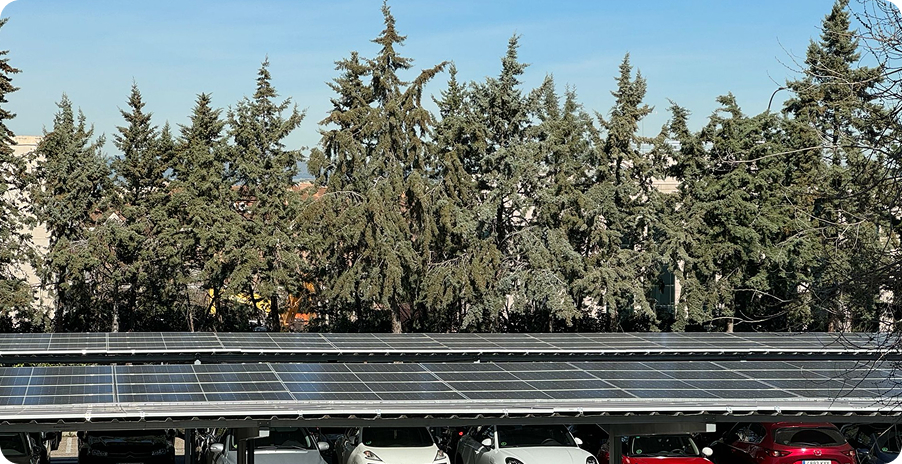
With the addition of Blua Sanitas Valdebebas Hospital to its hospital network, Sanitas continues to expand its photovoltaic generation capacity. Solar photovoltaic installations have also been replaced and expanded across its other hospitals and head office.
Hospital electrification
Electrification of kitchens to replace gas consumption with electricity and reduce the carbon footprint.
Care home electrification
Electrification of heating systems, kitchens and laundries across several care homes to replace gas consumption with electricity and reduce the carbon footprint.
Improving the building envelope in hospitals
Replacement of windows and installation of automated opening sensors to improve energy efficiency.
Green infrastructure
Green roofs and gardens at hospitals such as Sanitas La Moraleja University Hospital and Blua Sanitas Valdebebas Hospital enhance air quality, improve the wellbeing of patients and professionals, and help reduce indoor temperatures.
Eco-active spaces
01.
Sanitas headquarters
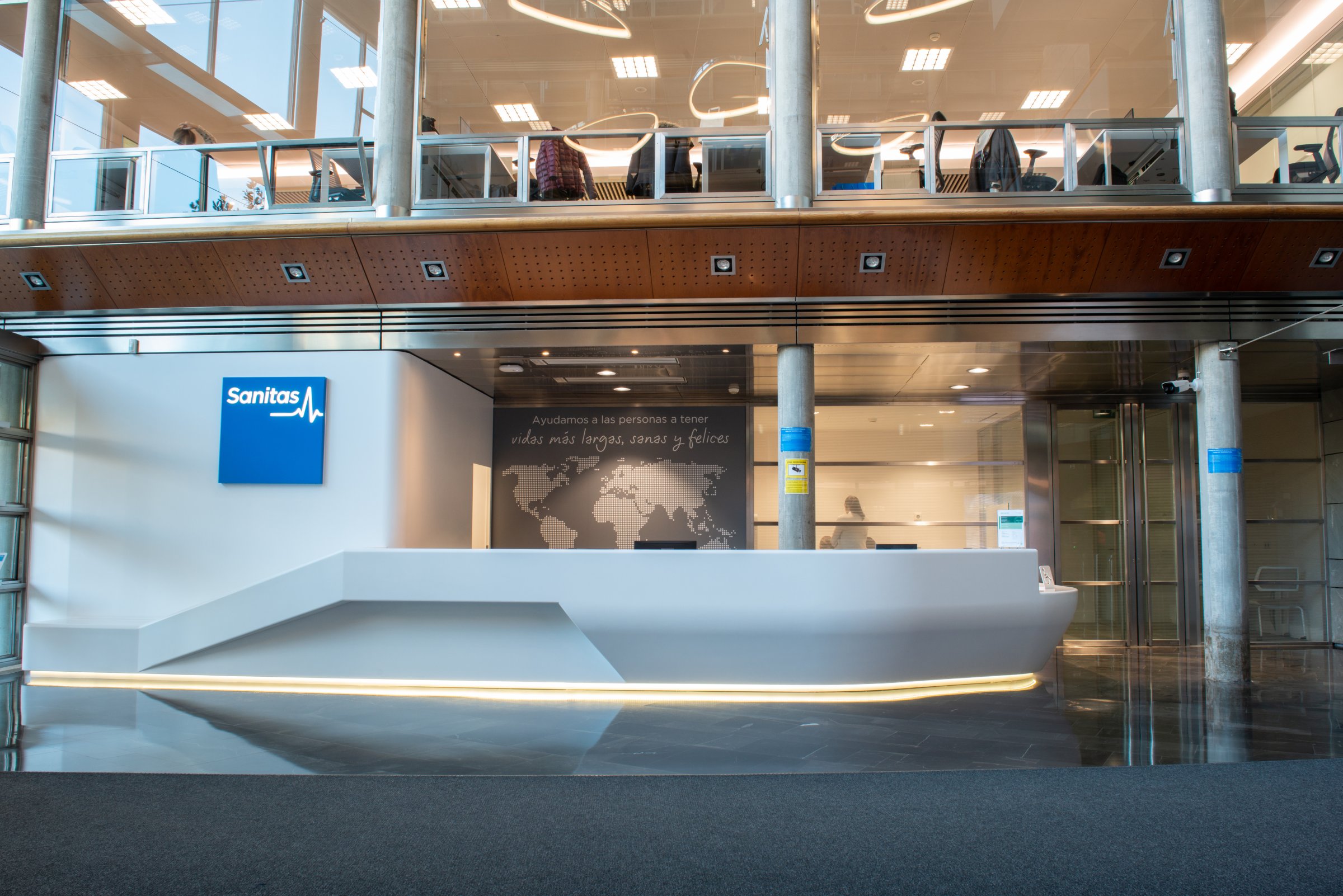
The company’s headquarters on Ribeira del Loira (Madrid), opened in 2000, has been awarded BREEAM In-Use Outstanding certification, one of the highest recognitions for the sustainability of buildings in operation.
Learn moreSanitas headquarters
In addition, the headquarters has been awarded AENOR’s Zero Waste certification, recognising that more than 90% of the waste generated is recovered and reincorporated as raw materials into new production processes.
It also holds ISO 14001 environmental certification, recognising the excellence of its Environmental Management System (EMS) and the organisation’s ongoing commitment to sustainability across all its operations.
02.
Sanitas Hospitals
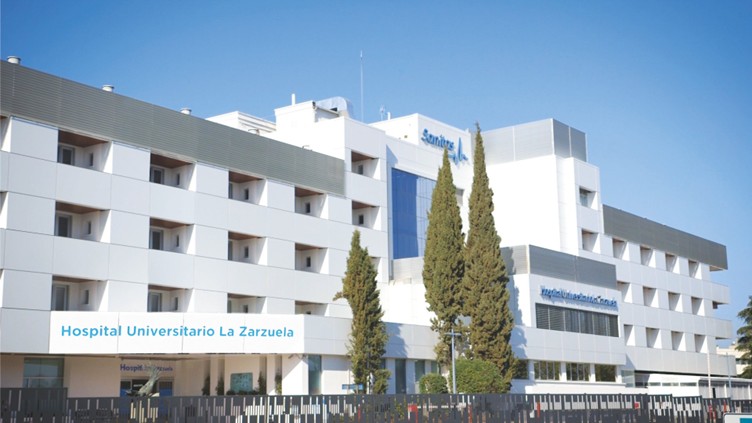
Sanitas university hospitals in Madrid — Sanitas La Zarzuela, Sanitas La Moraleja and Sanitas Virgen del Mar, all in Madrid — together with Hospital CIMA in Barcelona and the Sanitas central laboratory, operate an energy management system certified under ISO 50001 and also hold ISO 14001 environmental certification.
Learn moreSanitas Hospitals
In addition, the hospitals hold the ‘Towards Zero Waste’ certification, recognising Sanitas Hospitales’ commitment to waste reduction and decarbonisation.
Sanitas hospitals calculate their carbon footprint in accordance with ISO 14064, and follow specific protocols to monitor the consumption of natural resources, carbon emissions and waste generation. This monitoring helps identify opportunities for improvement and supports data-driven environmental management.
Sustainable anaesthesia
GRI 302-4
In 2025, Sanitas continued to reduce emissions associated with the use of anaesthetic gases, consolidating the progress achieved in previous years. Key measures included the elimination of nitrous oxide and desflurane, as well as the introduction of more efficient equipment to optimize metabolic flow rates during procedures. Since 2022, these actions have reduced emissions associated with nitrous oxide by an amount equivalent to 29% of the carbon footprint of Sanitas Hospitales in that year.

Reduction of indirect emissions
GRI 302-4, 305-2, 305-3
Beyond its own operations, Sanitas assesses emissions associated with business travel, electricity transmission and distribution losses, and the different stages of its value chain. The company establishes clear environmental commitments with its suppliers to integrate sustainability objectives into products and services, helping to reduce the indirect environmental footprint of healthcare.
More sustainable suppliers
Relationships with suppliers are built on performance tracking, transparency and collaboration throughout the value chain. To support this, Sanitas continues to strengthen its emissions measurement methodologies in line with the Greenhouse Gas Protocol (GHG Protocol) and the Science Based Targets initiative (SBTi).
More sustainable suppliers
Sustainable suppliers programme
For the third consecutive year, Sanitas participated in the Sustainable Suppliers Programme, an initiative promoted by the UN Global Compact Spain, Fundación ICO and ICEX Spain Export and Investment.
In 2025, Sanitas invited 292 SMEs with which it works regularly to support them in transforming their supply chains towards more sustainable models.
Information technology providers
Digital providers play a central role in the supply chain and are essential for enabling sustainable digital transformation. In 2025, Sanitas expanded its objective of aligning spending on technology suppliers with its sustainability commitments. As a result, a greater proportion of spending is now directed towards technology providers that are aligned with its emissions reduction goals and have made their own decarbonisation commitments across all three scopes.
Digitalisation driving decarbonisation
In 2025, Sanitas also expanded its portfolio of digital services. As a result, it continued to advance towards a model that reduces travel, eliminates paper-based processes and streamlines administrative procedures.
Digitalisation driving decarbonisation
Together, these initiatives reduce waste generation and greenhouse gas emissions, making digitalisation a key tool in addressing climate change and its impact on people’s health.
In 2025, digital healthcare services helped Sanitas avoid:
14,505
tonnes of CO₂e avoided
267
tonnes of waste avoided
These savings were achieved through:
Sanitas Seguros
Digital policy signatures and online corporate insurance purchasing eliminate printing, postal deliveries and paper records. Digital consultations and online medical report downloads alone avoided 13,728 tonnes of CO₂e in 2025.
Sanitas Hospitales
Cloud-based digital radiology replaces CDs and other physical media. Medical images are available online, avoiding unnecessary travel for patients. This digital approach to radiological tests and other hospital services has eliminated the use of up to 93 tonnes of raw materials and plastics. It has also prevented the emission of 503 tonnes of CO₂e associated with patients travelling to collect their results.
Sanitas Dental
Digital medical histories, electronic informed consent forms and online treatment plans have been part of Sanitas Dental’s digital transformation since 2018. Intraoral scanning improves clinical accuracy while significantly reducing the consumables associated with traditional impressions, such as disposable impression trays and impression materials. Overall, Sanitas Dental clinics prevented the emission of 274 tonnes of CO₂e and avoided the use of 65 tonnes of paper during the year.
Sanitas Mayores
Care homes have introduced digital signatures for new admissions and promote video consultations with healthcare professionals, reducing travel by relatives and specialists. In addition to saving more than 300 kilograms of paper, the initiative has improved the experience of families by providing greater flexibility when completing admission procedures. Video consultations with doctors and specialists also reduce the carbon footprint by eliminating the need for travel.
Sustainable mobility
Sanitas promotes a mobility model that reduces the carbon footprint associated with journeys made by employees and patients.
Sustainable mobility
Sanitas’ sustainable mobility plan aims to reduce the environmental impact of employees’ daily commuting by promoting more efficient and responsible alternatives. The plan includes an electric fleet for home healthcare services, electric and hybrid company vehicles, subsidised electric scooters in several cities, and a corporate bus service operating eight routes to the company’s headquarters.
Many Sanitas facilities also provide electric vehicle charging stations and bicycle parking.
Avoided CO2e calculator
The Mi Sanitas app helps raise awareness of environmental impact. Its calculator enables each patient to see the emissions they avoid by using video consultations or downloading medical reports online instead of travelling to collect paper copies.
A smaller environmental footprint
Reducing emissions also means optimising the use of water, materials and waste.